



Cardboard Tube Binoculars



You do not need expensive supplies to create an activity that encourages creativity, communication, and outdoor exploration. These cardboard tube binoculars are easy to make with materials you may already have at home, and they can turn an ordinary walk through the yard, park, or neighborhood into an opportunity for conversation and learning.
Materials Needed
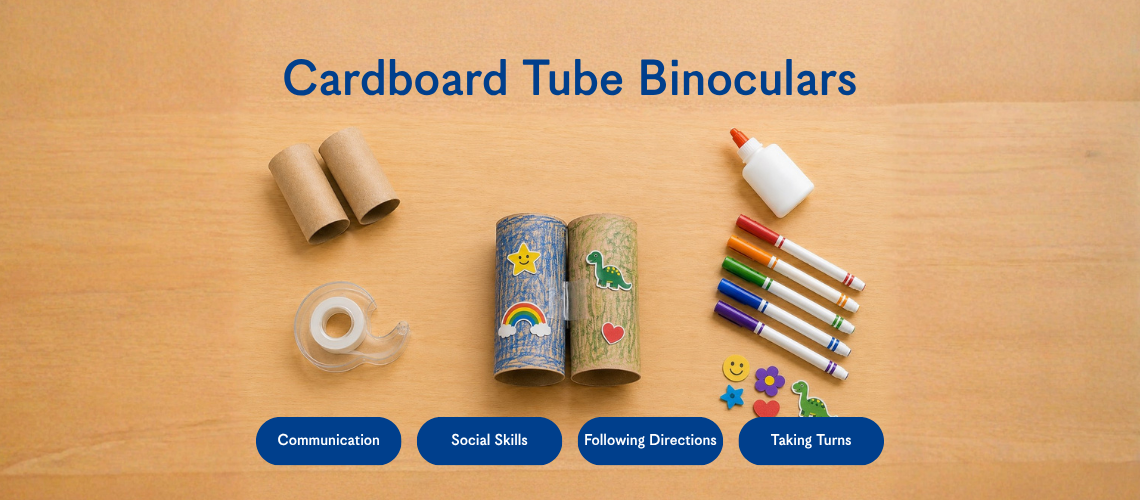
• Two empty cardboard tubes
• Tape, glue, or a stapler
• Crayons or markers
• Stickers
Instructions
Step 1: Attach the cardboard tubes
Place the two cardboard tubes beside each other and use tape, glue, or scissors to attach them.
Step 2: Decorate the tubes
Let your child decorate the tubes with crayons, markers, and stickers.
Step 3: Go on an adventure!
When the binoculars are ready, take your child outside on a walk or let them look outside to see what they can find.
Practice Describing What You See
The binoculars can help children practice describing objects using simple words and phrases.
You might model statements such as:
• “I see a tall tree.”
• “The bird is flying.”
• “That truck is loud.”
• “The flower is yellow.”
• “The squirrel is under the tree.”
Then invite your child to add a word or complete part of the sentence.
Try:
• “I see a…”
• “The car is…”
• “The bird is going…”
• “The flower is…”
• “The tree feels…”
Children who are not yet using phrases can practice pointing to or identifying the object you name.
Turn it into a Scavenger Hunt
Create a simple list of objects to find. You can draw pictures, print images, or simply name each item as you walk.
Look for:
• One bird
• Two flowers
• Something blue
• A circle
• A vehicle
• A bug
• A tall tree
• Something that makes noise
As your child finds each object, celebrate the discovery and talk about it.
You might say:
• “You found a blue car!”
• “How many flowers did you find?”
• “Where is the bird?”
• “What is the bug doing?”
• “What should we find next?”
Practice Position Words
A looking walk is also a natural way to practice words that describe location.
Use words such as:
• Above
• Below
• Beside
• Behind
• In front of
• Near
• Far
• Under
• On
Try prompts like:
• “The bird is above the house.”
• “Can you find something under the tree?”
• “What is beside the mailbox?”
• “Is the car near us or far away?”
• “What is behind the fence?”
The most important part of the activity is not creating perfect binoculars or completing every prompt. It's a wonderful opportunity to practice communication and social skills as you explore the world together!