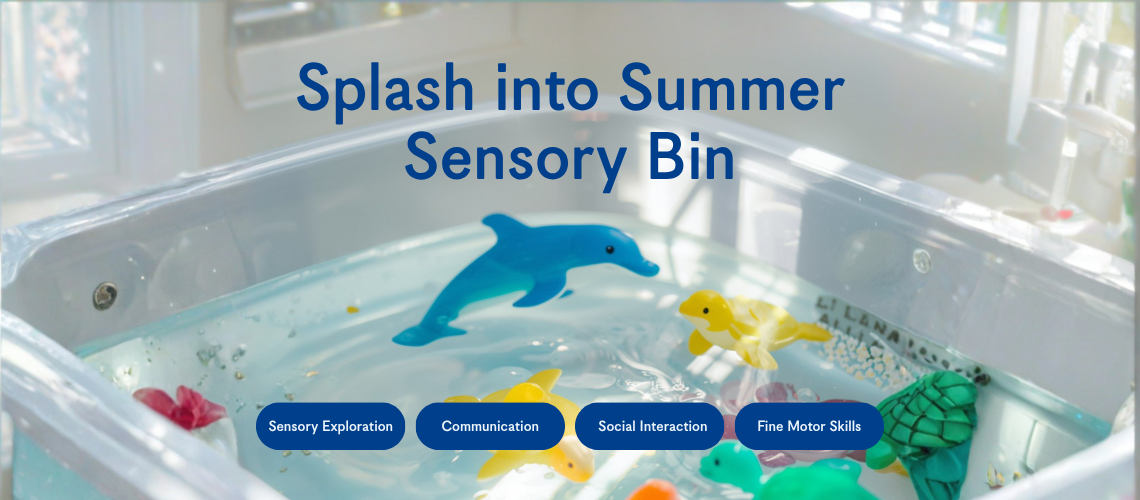




Make a Splash with This Easy Sensory Bin



On the hottest days of summer, we're all looking for the perfect way to beat the heat. This simple water-based sensory bin can be set up inside or outside, and it encourages children to explore, imagine, communicate, and learn through hands-on play. Your child explore their sense of touch, sight, and sound while working on communication, social interactions, and fine motor skills. Best of all, it uses materials you may already have at home!
Materials Needed
• A large plastic bin or container
• Water
• Plastic ocean or animal toys
• Small toys, treasures, or gems
• Cups, scoops, measuring cups, or small containers
Instructions
Fill a shallow bin with a few inches of water. Add toys and cups or scoops for pouring and exploring. Invite your child to investigate the animals, move them through the water, search for treasures, fill and dump containers, or create their own ocean adventure.
There is no right or wrong way to play. Follow your child's interests and allow them to explore at their own pace.
Starting a Conversation
One of the easiest ways to support communication during play is to join your child in what they are already doing. You can make observations and ask questions to start a conversation!
Try saying things like:
• The dolphin is swimming so fast!
• You found a little turtle.
• The whale made a huge splash.
• Your shark is hiding under the water.
• The octopus is swimming around the boat.
• Look how carefully you're pouring the water.
Try asking things like:
• Which animal is the biggest?
• How many animals are there?
• If you were a fish, what color would you be?
• What should we name this dolphin?
• Where do you think the turtle is going?
• Which animal would you want as a pet?
Playing Pretend
Pretend play is a great way to spark your child's imagination and help work on social skills, like asking for help, taking turns, and asking someone to play.
To practice asking for help, try saying:
• Oh no! The dolphin is lost. Can your turtle help him find his mommy?
• The whale is stuck behind the rocks. Can your dolphin help him?
• This little fish can't find his house. What should he do?
To practice taking turns, try saying:
• Let's let the dolphin swim first and then my turtle can have a turn.
• Thank you, dolphin! Now it's turtle's turn.
• The shark is waiting patiently. He's being a great friend.
To practice asking someone to play, try saying:
• Dolphin is bored. Turtle, would you like to play with him?
• Your fish wants a friend. Who should he ask to play?
• The crab wants to join the game. What should he say?
To practice problem-solving, try saying:
• The dolphin dropped his treasure.
• These fish are trying to cross the ocean. How can we help them?
• Oh no! The boat tipped over.
Parallel Play
Many children learn best when adults join their play rather than directing it. Parallel play simply means doing what your child is doing nearby. If your child scoops and pours water, try scooping and pouring next to them. If they are making their animals dive to find the treasure, grab an animal and join them on their treasure hunt. As your child becomes comfortable with your presence in the play, you can slowly add comments, observations, and pretend play ideas.
Remember, sensory play doesn't need to look a certain way to be valuable. Whether your child spends five minutes pouring water, creating an elaborate ocean adventure, or simply watching the animals float, they are learning, growing, and hopefully having a lot of fun with this summer fun sensory bin!